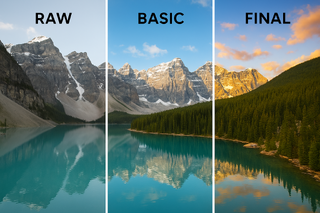
The Art of Professional Photo Editing Part 2 / Fine Art & Landscape Photography Techniques
Learn how professional editing transforms landscapes and fine art photography. Discover advanced color grading, retouching, and artistic techniques that bring emotion to every image.

Experience the breathtaking beauty of La Jolla’s golden hour with this fine art California sunset photograph, where the Pacific Ocean glows beneath a sky painted in radiant shades of gold, crimson, and violet. As the sun sinks toward the horizon, its warm light reflects across the gentle waves, capturing the timeless coastal beauty of Southern California. This La Jolla sunset photography masterpiece embodies tranquility, elegance, and the captivating spirit of the California coastline.
Perfect for fine art collectors, nature enthusiasts, and anyone who loves the serenity of ocean landscape photography, this piece brings warmth, color, and calm into any space. Whether displayed in a home, office, or gallery, it evokes the peaceful rhythm of the sea and the unforgettable glow of La Jolla’s golden hour — a true celebration of California coastal photography at its finest.
From Reality to Vision — Where Editing Becomes Art
Professional editing is where technical skill meets creative interpretation. It is not just about accuracy — it is about emotion, atmosphere, and storytelling.
In landscape photography, this means guiding the viewer’s eye through light and texture — creating harmony between sky, land, and color. In fine art photography, it means shaping tone and composition until the image speaks your artistic language.
Advanced Techniques in Landscape and Fine Art Editing
- Color Grading for Mood and Emotion
Subtle shifts in temperature, contrast, and saturation create emotion — cool blues for tranquility, warm tones for nostalgia, or muted hues for minimalism. - Dodging and Burning for Depth
Borrowed from the darkroom, this technique sculpts light digitally. By brightening highlights and deepening shadows, editors create dimensions and visual drama. - Local Adjustments and Focus Blending
Selective editing ensures that attention falls exactly where it should — enhancing clouds, sharpening focal points, or softening backgrounds for balance. - Atmospheric Enhancements
Adding gentle haze, glow, or vignetting can transform a simple landscape into a cinematic masterpiece. These subtle touches make the scene feel immersive. - Final Artistic Vision
The best edits do not scream “edited.” They feel natural yet intentional, as though the world truly looked that beautiful in that fleeting moment.
Retouching in Fine Art Photography
In fine art portraiture, editing is equally meticulous. It involves skin tone harmony, contrast control, and highlight recovery — done delicately to preserve realism while enhancing the subject’s presence.
Each image tells a story — whether a misty coastline or an expressive face — and editing ensures that story resonates with emotional clarity.
Why the Best Results Take Time
Professional editors do not rely on presets or shortcuts. Every image is unique — each landscape has different light, texture, and atmosphere that demands custom attention.
What separates professional photographers from casual shooters is not just the gear — it is their commitment to the craft, from composition to color correction to the final print.
The Art of Patience and Perfection
Fine art photography editing is a slow, thoughtful process. It is about feeling the image evolve, layer by layer, until it becomes something timeless.
At Michael Smith Photography, each photograph receives that same respect and dedication — whether it is a landscape drenched in golden light or a fine art portrait alive with emotion.