
Medium Format Mastery: Using the Hasselblad X2D 100C for MuseumQuality Large Landscape Prints
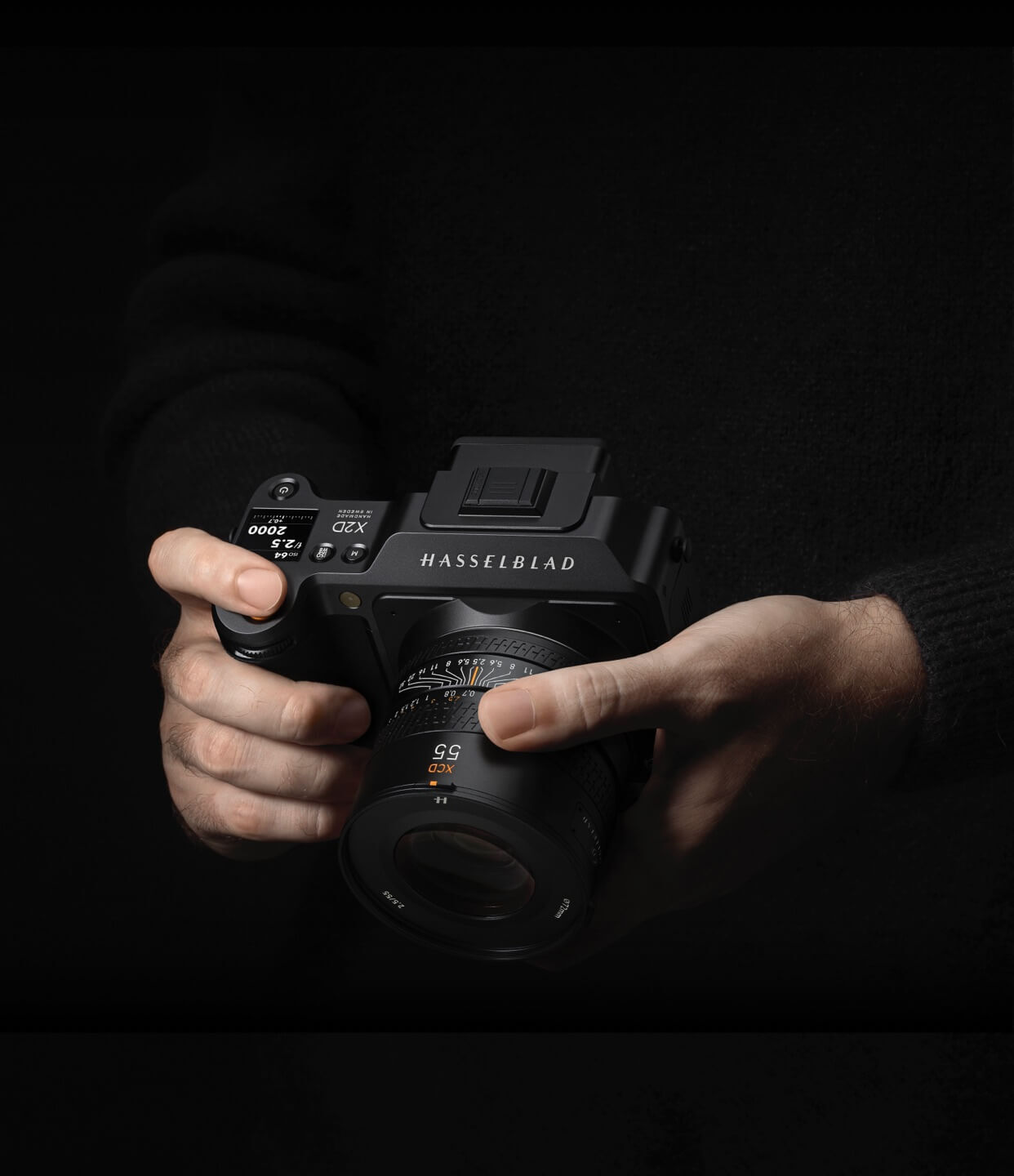
When the end goal is a museum quality, large format landscape print, every technical choice matters: sensor size, lens design, dynamic range, color depth, and workflow. For Michael Smith Fine Art Photography, that standard is met with the Hasselblad X2D 100C medium format camera—a tool built specifically for ultra-high resolution fine art landscape photography and archival large format printing.
This in depth, technical guide explores how medium format, and specifically the Hasselblad X2D 100C, delivers the kind of clarity, tonal depth, and color fidelity that serious collectors, galleries, and interior designers demand when quality truly matters.
Why Medium Format for Fine Art Landscape Photography?
1. Larger Sensor, Higher Resolution, and Exceptional Color Depth
Medium format sensors are significantly larger than full frame sensors. In practical terms, this means:
- Ultrahigh resolution image files (in the case of the X2D: 100 megapixels)
- Extremely fine micro-detail in distant mountain ridges, grasses, rock textures, and clouds
- Massive flexibility for large format fine art prints at 40×60, 60×90 inches, and beyond
On the Michael Smith Fine Art Photography landscape collections, this is achieved using the Hasselblad X2D 100C, featuring a 100megapixel back-illuminated (BSI) CMOS sensor with 16bit color depth and up to 15 stops of dynamic range.
The quality advantages are profound:
- Dynamic Color Range and Tonal Fidelity
- Exceptionally smooth tonal transitions in dawn and twilight skies
- Subtle gradations in fog, mist, and atmospheric haze without banding
- Deep, nuanced shadow detail that remains clean and printable, even when gently lifted in post.
- Rich, Natural Color Rendition
- Hasselblad’s renowned color science produces lifelike, balanced hues—especially in complex palettes like sunsets, alpine meadows, and coastal seascapes.
- Delicate color separation in greens, blues, and earth tones, crucial for large prints where color blocking or over saturation quickly looks artificial.
- PrintReady Detail and MicroContrast.
- Fine textures (lichen on rock, tree bark, ripples in sand) maintain structure even at extreme enlargement.
- Micro-contrast is preserved without aggressive sharpening, yielding a natural, “optical” clarity instead of a digitally over-processed look.
The Hasselblad X2D’s 16bit files contain vastly more tonal information than typical 12 or 14bit cameras, giving Michael enormous flexibility to shape contrast and mood while retaining smooth, creamy gradations that translate beautifully to museum-grade archival papers.
For quality-driven large format prints, this combination of resolution, dynamic range, and color depth is what allows viewers to step inches from the artwork and still experience a seamless, detailed, noise free image.
2. The Medium Format “Look”: Depth, Presence, and Refinement
Beyond specs, medium format—and particularly the X2D—offers a distinctive visual character:
- Enhanced sense of depth and dimensionality at typical landscape apertures (f/8–f/16)
- A refined, three dimensional separation between foreground elements, middle distance, and distant peaks
- Silky tonal rolloff in highlights and shadows, free from the harsh clipping often seen in smaller formats.
In large format landscape prints, this translates into images that feel immersive and lifelike, with a calm, refined rendering rather than brittle micro contrast or over-sharpened edges.
Technical Considerations for Medium Format Landscapes
1. Resolution, Pixel Pitch, and Diffraction
With 100 megapixels, precision is critical:
- Optimum aperture range is typically f/5.6–f/11 for maximum acuity and minimal diffraction.
- Stopping down beyond f/11–f/16 on a 100MP sensor can introduce diffraction-induced softness, visible in oversized prints.
- Instead of relying on tiny apertures, Michael often uses hyper-focal focusing or focus stacking to retain depth of field without sacrificing micro detail.
This technique driven approach allows the full resolving power of the Hasselblad system to shine in print.
2. Tripod Discipline and Vibration Control
The resolving power of the X2D makes even the smallest vibrations visible:
- Heavy-duty carbon fiber tripod designed for high rigidity.
- Precision ball or geared head to prevent compositional drift.
- Use of electronic shutter or electronic first curtain (EFCS) where appropriate
- Remote triggering, self timer, or mobile app release to eliminate contact vibration.
These measures ensure that every pixel of the 100MP file contributes to a crisp, stable final print.
3. Medium Format Optics Optimized for 100MP
Not all lenses are equal at 100MP. For high end fine art landscape printing, Michael relies on native Hasselblad XCD lenses engineered for:
- Edge-to-edge sharpness across the entire frame at real world apertures
- Suppressed chromatic aberration and minimized field curvature.
- Low distortion for clean horizons and architectural lines
- High micro contrast, delivering lifelike textures without aggressive post processing.
Key focal lengths for landscape work:
- Wide angle (≈21–28mm equivalent) for sweeping vistas and dynamic foregrounds.
- Normal (≈35–50mm equivalent) for natural, human eye perspective compositions
- Short telephoto (≈70–120mm equivalent) for compressed mountain layers, ridge lines, and atmospheric scenes
Exposure and Dynamic Range for PrintOptimized Files
1. Protecting Highlights While Preserving Shadow Nuance
With the X2D’s expansive dynamic range, Michael can:
- Expose conservatively to protect delicate highlight detail in bright clouds, snowfields, and reflective water.
- Confidently retrieve shadow information from rock faces, forests, and dark foreground elements without banding or ugly color shifts
- Use exposure bracketing only when a scene exceeds even medium format DR—then blend for a natural, print ready composite.
This careful exposure strategy ensures printable highlight and shadow detail, crucial for museum grade landscapes viewed under gallery lighting.
2. Base ISO and Clean, Printable Files
Fine art prints reveal everything; noise or heavy noise reduction quickly becomes obvious on a scale:
- Shooting at base ISO (often ISO 64–100) whenever possible for maximum clarity and dynamic range
- Leveraging tripod support and, when needed, neutral density filters for long exposures instead of increasing ISO.
- Producing files with exceptionally clean shadows, allowing subtle local contrast adjustments without noise artifacts
The result is an image that can be enlarged dramatically while retaining a smooth, film-like grain structure—often nearly invisible at typical viewing distances.
Field Workflow for HighQuality Medium Format Landscapes
1. Scouting and Composition for Print Impact
Large prints amplify composition; any weakness becomes obvious:
- Pre scouting locations for strong, graphic foregrounds and clean horizons
- Evaluating how leading lines, diagonals, and layered elements will read at large scale on a wall.
- Considering how textures (rock, ice, foliage, sand) will appear when enlarged—choosing scenes that reward close viewing.
Medium format’s high resolving power means these decisions are richly rewarded in print.
2. Focusing on Critical Sharpness
With 100MP resolution, critical focus is nonnegotiable:
- Using live view magnification to place focus precisely on key foreground or mid-distance elements
- Applying hyper-focal distance calculations where appropriate, then verifying actual sharpness across the frame
- Employing focus stacking for complex near-to-far compositions—creating a master file that is tack sharp from front to back.
This disciplined approach ensures that every area of the landscape that matters holds up under large scale reproduction.
3. Bracketed Exposures for Complex Light
Even with 15 stops of dynamic range, some scenes—sunset backlighting, deep canyons, high-contrast storms—benefit from:
- Multi-frame exposure bracketing (commonly ±1–2 EV)
- Careful blending to maintain a natural, realistic appearance, avoiding the “HDR look.”
- Retention of subtle highlight and shadow nuance that remains visible and pleasing in large prints.
These blended files, combined with the X2D’s underlying 16bit depth, provide a robust foundation for serious fine art landscape printing.
PostProcessing for MuseumQuality Large Format Prints
1. RAW Development: Preserving the Medium Format Advantage
In software such as Capture One or Lightroom, Michael’s RAW workflow emphasizes:
- Starting with neutral, low contrast profiles that respect the native tonal latitude of the X2D files.
- Carefully balancing global exposure, highlights, and shadows to reveal all important detail without flattening the scene
- Subtle, localized contrast to enhance depth while maintaining the smooth tonal rolloff medium format is known for.
- Precise white balance and color grading to honor the natural character of the landscape while creating an emotionally resonant palette.
The goal is a balanced, technically pristine master file that will translate faithfully to archival print.
2. Focus and Exposure Blends
For scenes requiring stacking or bracketing:
- Focus stacks are combined using specialist software (e.g., Helicon Focus or Zerene Stacker), preserving micro detail from foreground to infinity.
- Exposure blends or luminosity masking techniques in Photoshop ensure extended dynamic range without artificial tones.
- All blending artifacts (halos, mismatched edges, color shifts) are meticulously corrected at 100% zoom, with final print size in mind.
Because the Hasselblad files are so clean and information-rich, these advanced blends retain a natural, seamless appearance even at monumental sizes.
3. Sharpening and Noise Reduction for Print, Not Screen
Sharpening choices are calibrated to the intended print dimensions and paper type:
- Light capture sharpening applied early to compensate for sensor/lens characteristics.
- Final output sharpening tuned for matte, semigloss, or baryta papers at the target size and viewing distance.
- Selective sharpening of key structures (mountain edges, moss, rock detail, tree trunks) while protecting smooth skies and water.
- Gentle, targeted noise reduction only where needed, preserving legitimate texture in detailed areas.
This print-centric approach ensures that Michael Smith Fine Art landscape prints appear richly detailed, yet never harsh or over processed.
Preparing Hasselblad X2D Files for Archival Large Format Printing
1. Resolution, Scaling, and Print Size
With 100 megapixels, the X2D files support ambitious print sizes:
- Comfortable native printing at 240–300 ppi for large works without visible softness
- Ability to produce extra large statement pieces (60 inches and beyond on the long side) with minimal or no upscaling.
- When additional scaling is required, using high quality interpolation tools, applied conservatively to preserve natural detail.
Collectors and designers benefit from prints that feel crisp, detailed, and immersive, even in expansive spaces.
2. Color Management and SoftProofing
For exacting color reproduction:
- Working in a wide gamut color space (Adobe RGB or ProPhoto RGB) during editing
- Soft-proofing with ICC profiles tailored to the specific printer and fine art paper.
- Adjusting saturation, contrast, and local tones to ensure the printed result matches the calibrated display as closely as possible.
- Carefully managing out-of-gamut colors (intense blues, reds, or greens) to maintain natural yet impactful color in print
This ensures that what you see in the gallery or studio environment is a faithful translation of the original Hasselblad capture.
3. Archival Materials and Finishing
To complete the quality chain from capture to display:
- Printing on archival, museum grade papers such as 100% cotton rag and premium baryta stocks
- Using pigment based inks for superior longevity, color stability, and fade resistance
- Mounting and framing with acid free materials and UV protective glazing to protect the image over decades
- Offering limited edition prints, signed and numbered, reinforcing exclusivity and collectible value.
These standards ensure that each Michael Smith Fine Art landscape print is not only visually striking but also archivally robust, suitable for serious collectors, galleries, and design driven interiors.
When Quality Matters: Why Michael Smith Chooses Medium Format
For clients, designers, and collectors who insist on the highest possible image quality, the Hasselblad X2D 100C medium format system is the backbone of Michael’s landscape work. It enables:
- Oversized statement pieces that retain pristine detail and smooth tonal gradation
- Luxurious fine art landscape prints for modern residences, boutique hotels, and corporate environments
- Exhibition grade imagery that withstands the scrutiny of close viewing in galleries and museums.
Every stage—from field capture to final framing—is optimized to honor the capabilities of the medium format sensor, lenses, and color science, resulting in landscape photographs with extraordinary clarity, depth, and dynamic color range.
Explore the Landscape Collections on the Michael Smith Fine Art Photography website www.michaelsmithphotography.com to see how the Hasselblad X2D 100C and a meticulous, print focused workflow come together to create museum quality large format prints when quality truly matters.