
How to Frame Fine Art Photography
Creating an award-winning photograph does not end with pressing the shutter. The true presentation of fine art photography comes to life through how the image is framed, displayed, and experienced. A powerful frame complements the vision, enhances the composition, and turns a moment in time into a museum-quality piece of art.
As a fine art photographer based in Houston, Texas, my goal has always been to guide light, composition, and craft into a visual story — and then give that story a home worthy of its beauty. Over the years, I have learned that the right framing can elevate a photograph from simply being seen to truly being felt.
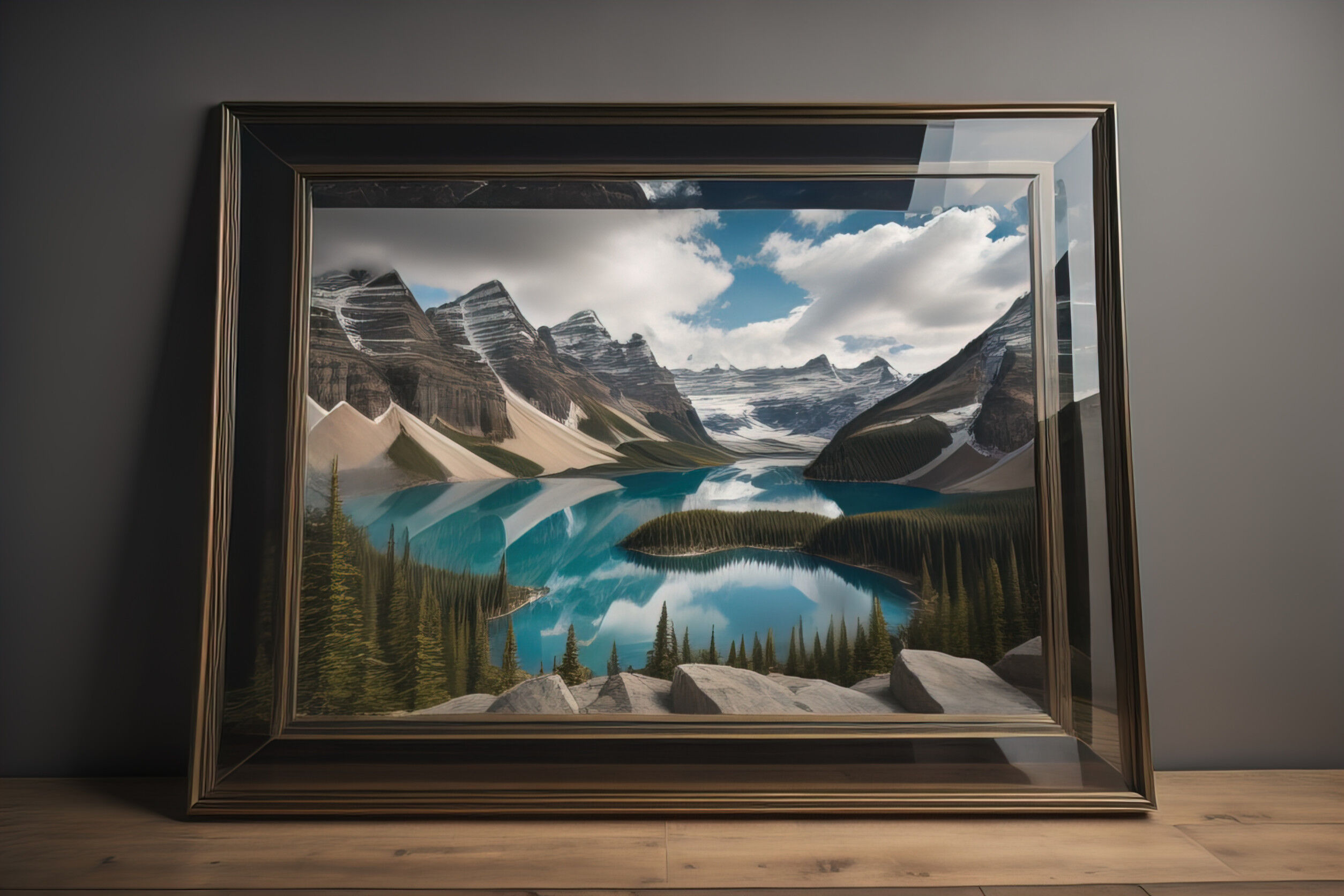
Glass picture frame on a solid color background. ai generative
1. Begin with the Story the Image Tells
Before choosing a frame, ask what the image is saying. Every award-winning photograph has its own mood, tone, and emotional language.
- A landscape bathed in early morning light may call for a frame that enhances softness and depth.
- A bold architectural piece might demand sharp lines and a minimalist edge.
- A moody, dramatic composition might work best with darker tones that echo its intensity.
When I photographed Moraine Lake in Banff, Alberta, I knew the tones of turquoise water and golden sunrise would need a presentation that conveyed both tranquility and strength. The frame was not an afterthought — it became part of the visual experience, extending the image beyond its borders.
2. Choose a Frame That Complements, Not Competes
The most successful frames do not steal attention; they guide the viewer’s eye inward.
For fine art landscapes, I recommend simple, clean lines with neutral or natural finishes. Black, white, or brushed metal frames often let the photograph breathe, giving space for light and color to command attention.
For collectors seeking a modern, gallery-quality presentation, acrylic and metal finishes — both of which I offer through Michael Smith Photography — create a luminous depth that enhances fine detail and tonal range. Acrylic brings a vibrant, glass-like clarity, while metal prints provide a sleek, contemporary feel with edge-to-edge brilliance.
Each finish offers a different dialogue with light — and as photographers, we know that light changes everything.
3. Balance Matting, Space, and Breathing Room
Matting is often overlooked, yet it is one of the most critical aspects of presentation. A well-chosen mat provides visual breathing room, allowing the eye to rest before engaging in the artwork.
For lighter images, a soft white or ivory mat enhances brightness and depth.
For darker or moodier compositions, a charcoal or slate mat can add sophistication and contrast.
Always use acid-free, archival-quality materials — this preserves the image’s color and prevents long-term fading. In professional fine art framing, presentation is also preservation.
4. Consider Lighting in Your Display Environment
Even the most perfectly framed image can lose its impact if poorly lit. Photographs are meant to interact with light, not fight against it.
Whenever possible, use natural, diffused light or adjustable gallery spotlights angled to avoid glare. For acrylic or metal fine art prints, this is especially important, as the reflective surface magnifies highlights.
I often advise clients to view their artwork under the lighting conditions where it will live — morning, afternoon, and evening — to understand how shadows and reflections evolve throughout the day. Fine art should transform with the light, just as the moment it captured once did.
5. Let Craftsmanship Reflect the Art
An award-winning image deserves the same level of craftsmanship in its frame as in its composition. Whether you are printing on archival paper, metal, or acrylic, ensure every part of the process meets gallery-level standards:
- UV-protected glass or coating to guard against light damage
- Precision mounting to eliminate warping or air gaps.
- Professional hardware for stability and longevity
Each fine art piece I produce is custom-made to order, ensuring that the framing and finish reflect the photograph’s integrity. It is a meticulous process that takes time — but true artistry always does.
6. Framing as an Extension of Vision
Framing is not decoration — it is continuation of composition. It transforms a photograph from a captured image into an object of emotion and permanence.
When collectors and fellow photographers view my work, whether it is the misty mornings of Caddo Lake or the crisp alpine light of Banff, I want them to experience more than a photograph. I want them to feel the care, precision, and passion behind every decision — from the aperture chosen in the field to the final frame on the wall.
The experience of photography brings joy not only to those of us behind the camera but also to those who share in the result. Seeing someone connect with a framed image — their eyes tracing the light, their breath slowing in quiet admiration — is the greatest reward of all.
Conclusion: The Frame is the Final Chapter
A frame is not merely an accessory; it is the last chapter of the story. It defines how your image is perceived, remembered, and cherished. Whether displayed in a gallery, a collector’s home, or a quiet personal space, the right frame gives permanence to the fleeting beauty of light.
At Michael Smith Photography, every fine art piece is handcrafted to the highest standards — printed, mounted, and framed with precision and respect for the image. Because an award-winning photograph deserves more than to be seen. michaelsmithphotography.com